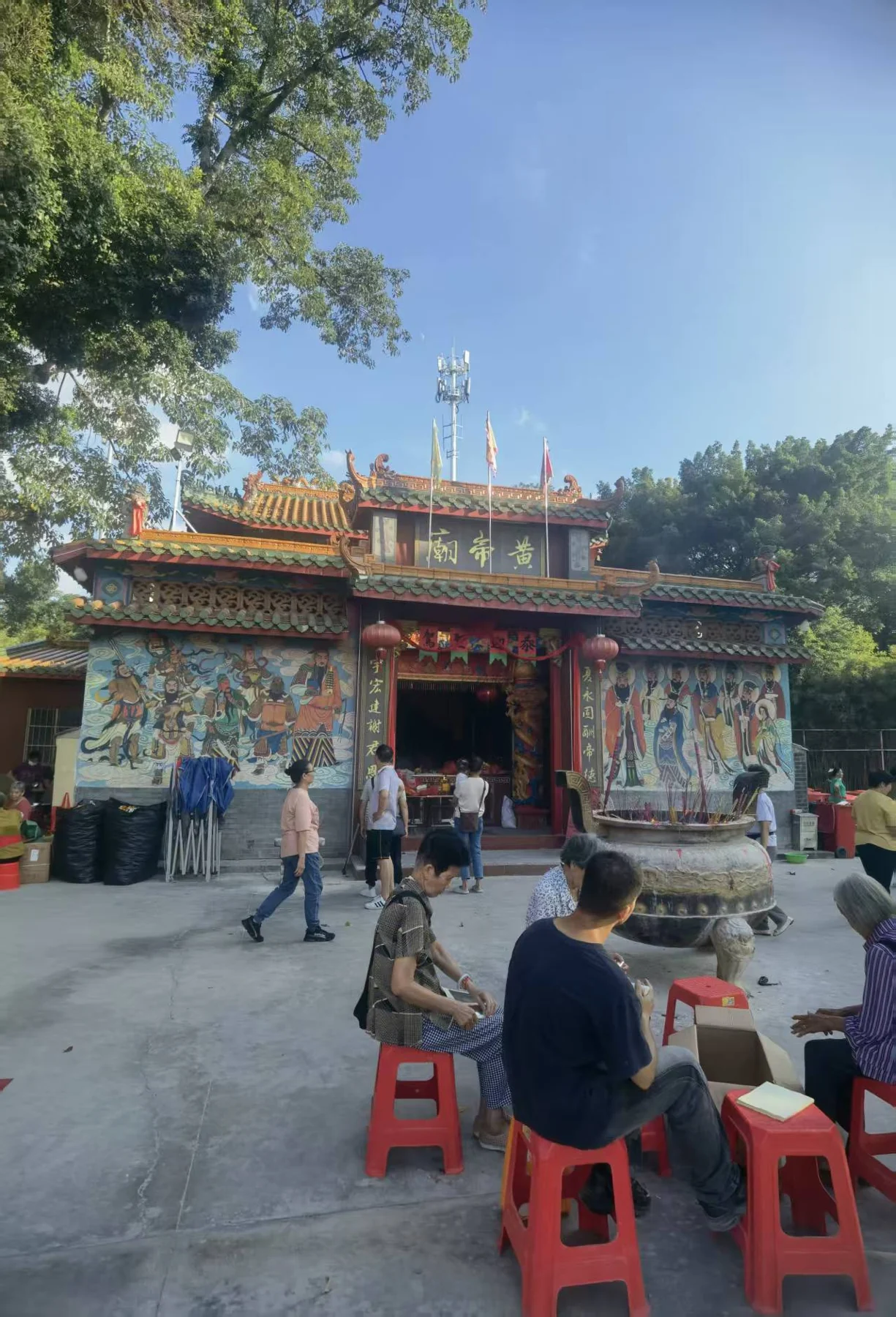
An autumn breeze moves across the Yong River. Beside Jiangnan Avenue in Nanning’s Jiangnan District, Huangdi Temple 「黃帝廟」 is filled with the fragrance of incense and the hum of conversation.
It is Chongyang 「重陽」, the Double Ninth Festival, celebrated on the ninth day of the ninth lunar month. In 2026, it fell on 18 October. In the numerical symbolism associated with the Yijing 「易經」, or Book of Changes, nine is the highest single-digit yang number. The two nines give the festival its name: “Double Yang.” Nine also sounds like the Chinese word for “lasting,” making the occasion a fitting time to wish one another long life and well-being. Hong Kong Observatory calendar; the symbolism of nine.
Traditionally a day for climbing hills and enjoying autumn, Chongyang is also a time to honor older people. Here in Nanning, a green city in southern China, a temple gathering brings that meaning to life. Through prayer, conversation, and preparations for a shared meal, Daoist culture meets the everyday needs of a community.
Inside the Temple: Reverence and Everyday Hopes
Colorful murals of deities greet visitors at the entrance. Inside the main hall, red lanterns hang overhead. Daoist priests in ceremonial robes lead the worshippers, with the rhythm of a ritual drum accompanying their bows. On the floor, a cloth bears the bagua 「八卦」, the eight trigrams used in Chinese cosmology. Incense rises nearby, and red cushions embroidered with lotus flowers offer a place to kneel.
The wishes people bring are simple: peace at home, good health, and days that pass a little more smoothly.
Daoist thought can seem distant at first, something found in difficult books or quiet mountain retreats. Yet the Zhuangzi 「莊子」 offers a wonderfully earthy reminder that the Dao 「道」, often translated as “the Way,” is everywhere, even in things we usually consider lowly or unclean. Laozi 「老子」, too, describes the great Dao as flowing freely in every direction. The Way is present in the world around us. Zhuangzi, “Knowledge Travels North”; Dao De Jing, chapter 34.
At Huangdi Temple, offerings express reverence for Huangdi 「黃帝」, the Yellow Emperor, traditionally honored as a founding ancestor of Chinese civilization. Alongside that reverence are hopes for harmony between heaven, earth, and human life: timely rain, a peaceful household, and a family that can flourish together.
These are hopes people can recognize without having studied a single classical text. They are one way a living tradition speaks to ordinary life.
Outside the Temple: Red Tables and Room to Breathe
Beyond the solemnity of the hall, the courtyard has a different warmth.
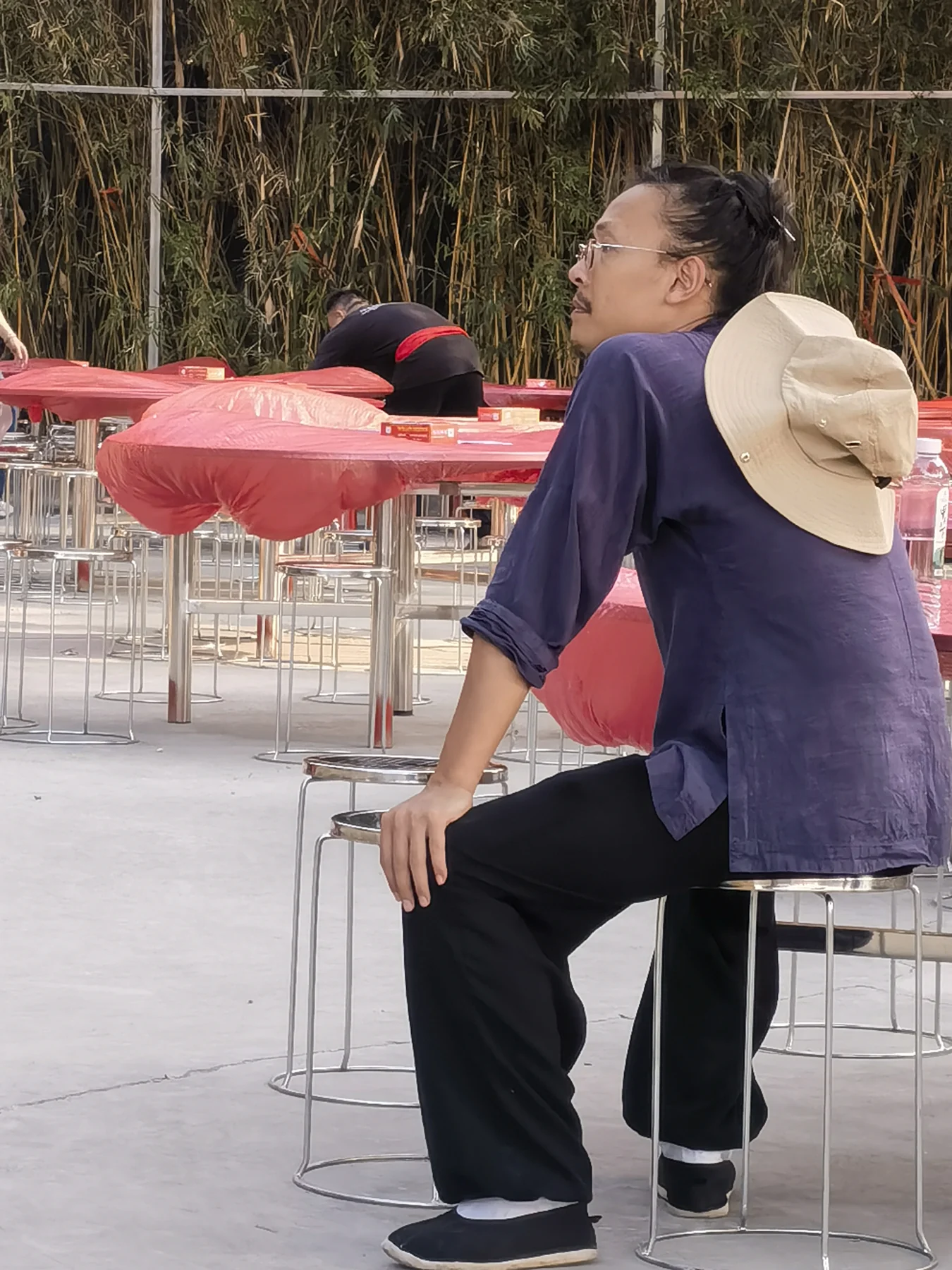
Dozens of round tables, covered in bright red, stand ready for a communal meal. Metal stools catch the autumn light. Older women sit together, chatting about everyday things. A man in an indigo Chinese-style shirt rests on a stool, a broad-brimmed hat hanging against his back, his gaze drifting into the distance.
It is an unhurried scene: a place to sit, familiar company, and a meal to look forward to. The preparations give the festival’s wishes for long life a practical, human shape.
In chapter 80 of the Dao De Jing 「道德經」, Laozi imagines people content with the essentials of their lives:
「甘其食,美其服,安其居,樂其俗。」
“Savor their food, delight in their clothing, feel at ease in their homes, and enjoy their customs.”
— Dao De Jing, chapter 80, translated here from the Chinese.
The scene in the courtyard calls that passage to mind. There is room in a Daoist understanding of life for the pleasures of a good meal, companionship, and a comfortable place to rest. Hunger asks for food; tiredness asks for sleep. Older people deserve respect and care.
Across China, Chongyang customs include festive cakes, chrysanthemum wine, and gatherings to honor elders, though traditions vary from place to place. Such customs carry longstanding wishes for safety and longevity. Here, the tables waiting to welcome older guests offer a simple reflection: could caring for one another also be part of spiritual practice? Chongyang customs.
Wang Chongyang 「王重陽」, the founder of the Quanzhen 「全真」, or Complete Perfection, Daoist tradition, offered this plain-spoken advice:
“If you wish to practice sincerely, eat when hungry; close your eyes when sleepy.”
His teaching places these ordinary acts within the cultivation of inner clarity and stillness. Read in that light, a bowl of rice, a moment of rest, and a shared smile can all become occasions to practice. Sik Sik Yuen’s discussion of the teaching.
A Festival Woven from Many Traditions
Chongyang brings together seasonal customs, stories of protection and longevity, and the care of older generations. Its connections with Daoist culture are part of that wider history.
Huangdi and Laozi are linked in Huang-Lao 「黃老」, an early current of Chinese thought associated with both figures. Their place in Chinese cultural and religious life helps explain why a temple honoring Huangdi can provide a setting for reflections on the Dao. Chinese Taoist Association on Huang-Lao and Daoist thought.
One well-known Chongyang legend tells of Huan Jing 「桓景」 and his teacher, Fei Changfang 「費長房」. Following his teacher’s warning of danger, Huan Jing takes his family to higher ground, carrying zhuyu 「茱萸」, an aromatic plant, and drinking chrysanthemum wine. The story is traditionally associated with the festival’s protective customs. It is a legend passed down through generations, one thread in the festival’s history. The legend recorded in Xu Qi Xie Ji.
The name Chongyang may also bring Wang Chongyang to mind. Readers of Jin Yong’s martial arts novels may recognize his name, but he was also a historical teacher: he lived from 1112 to 1170 and founded the Quanzhen tradition, centuries before his life inspired a fictional portrayal. Chongyang Palace’s account of Wang Chongyang.
At Nanning’s Huangdi Temple, reverence for a cultural ancestor, prayers for well-being, and the custom of honoring elders come together in one gathering. The scene invites us to see Daoist culture as something people carry into their lives.
To respect nature and follow the seasons can mean welcoming autumn with gratitude and wishes for health.
To value simplicity, inner stillness, and wuwei 「無為」, acting without needless force, can mean finding a quiet moment in a busy city and meeting the day with less strain.
To live with ziran 「自然」, the natural unfolding of things, can mean responding attentively to the needs of life: making space for rest, nurturing family relationships, and helping older people grow old with dignity.
These are everyday reflections inspired by Daoist ideas, expressed through the life of a community.
Living in the World, Keeping Some Freedom Within
Two nines together; a wish for good days that continue, year after year.
At Huangdi Temple in Nanning, tradition lives among the sounds and textures of the present: incense in the hall, conversation in the courtyard, and red stools pulled up for a moment’s rest.
For those living ordinary family lives, Daoist wisdom can offer a way to remain involved in the world while keeping a little spaciousness within. We can care about our responsibilities, enjoy the company of others, and still loosen our grip on the worries that crowd the mind.
Perhaps that is a small, everyday glimpse of xiaoyao 「逍遙」, the ease and freedom evoked in Zhuangzi’s writings: sitting among familiar voices, seeing older generations cared for and younger ones laughing, with nothing more urgent to do than be there.
To live with reverence, tend our character, care for the old and the young, and give our attention to the day before us—this is one way the Dao becomes part of life.
New to Daoist culture? Continue with a welcoming introduction to the ideas and words behind the stories.


